
Wildfire Safety for Seniors and Caregivers: Planning Today for Greater Peace of Mind
#WildfireSafety #FireSafetyPlan #EscapePlan #FirePlans4Seniors
When we think about wildfire preparedness, it’s easy to picture protecting homes and gathering emergency supplies. But for older adults, wildfires can bring additional challenges that require extra planning and support. Whether you’re an older adult preparing for fire season or a caregiver helping a loved one stay safe, taking a few proactive steps before an emergency can make all the difference.
A thoughtful plan helps reduce stress, supports independence, and ensures important medical needs aren’t overlooked if an evacuation becomes necessary.
Why Seniors Face Greater Risks During Wildfires
Wildfires are no longer limited to a handful of western states. Smoke and fire activity now affect communities across the country, making preparedness important for families everywhere.
Older adults often face unique challenges during these emergencies, including:
- Mobility limitations or reliance on assistive devices
- Chronic health conditions
- Greater sensitivity to wildfire smoke
- Dependence on medications or medical equipment
- Cognitive conditions such as dementia
- Living alone or having limited support nearby
These factors can make evacuating quickly more difficult, which is why preparing ahead of time is so important.
Build a Personalized Wildfire Plan
Every family’s situation is different, so every emergency plan should be too. Caregivers and older adults should work together to create a written plan that includes:
- An out-of-area emergency contact
- Multiple evacuation routes in case roads are closed
- Transportation arrangements and backup options
- Accessible shelters or safe destinations
- A communication plan if phone or internet service is interrupted
If your loved one lives in an assisted living or senior housing community, ask about the facility’s wildfire evacuation procedures so everyone understands what to expect. Practicing the plan periodically can also help reduce confusion if an evacuation becomes necessary.
Prepare a Go-Bag Designed for Senior Needs
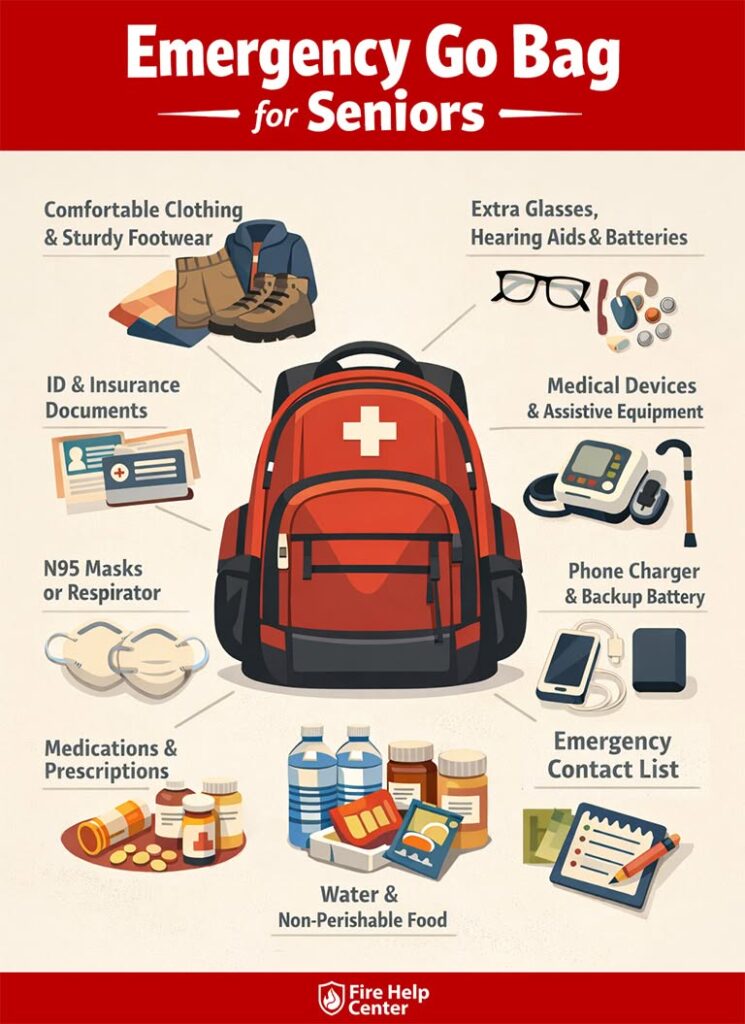
A standard emergency kit may not include everything an older adult relies on each day. Preparing a senior-specific go-bag in advance means essential items are ready to grab at a moment’s notice.
Consider including:
- Comfortable clothing and sturdy shoes
- Water and easy-to-eat, nonperishable snacks
- Current medications and copies of prescriptions
- A written medication list
- Medical devices or portable assistive equipment
- Extra glasses, hearing aids, and batteries
- Identification and insurance information
- A phone charger and backup battery pack
- A written list of emergency contacts
- N95 masks or equivalent respiratory protection for smoke exposure
Review the contents regularly to make sure medications, contact information, and supplies stay up to date.
Protect Older Adults from Wildfire Smoke
Even if flames are far away, wildfire smoke can travel long distances and significantly affect air quality. Older adults are especially vulnerable because smoke contains fine particles that can worsen heart and lung conditions.
To reduce exposure:
- Keep windows and doors closed when smoke levels are high
- Use air conditioning or HVAC systems on recirculation mode
- Run portable HEPA air purifiers if available
- Create a designated clean-air room
- Monitor local Air Quality Index (AQI) conditions
- Limit outdoor activity when air quality is poor
If an older adult develops chest pain, shortness of breath, confusion, or severe fatigue after smoke exposure, they should seek medical evaluation promptly.
Supporting Someone with Dementia During an Emergency
Wildfires can be especially confusing and frightening for individuals living with dementia or other cognitive conditions. Caregivers can help by:
- Using calm, simple communication
- Keeping familiar items nearby, such as glasses, hearing aids, photographs, or comfort objects
- Encouraging familiar routines whenever possible
- Making sure identification bracelets or medical alert information are worn
- Closely supervising to reduce the risk of wandering
During an evacuation or smoke emergency, individuals with cognitive impairment should never be left alone. Clear, step-by-step guidance can help reduce confusion and anxiety.
Prepare for Power Outages Before They Happen
Wildfires often lead to planned power shutoffs or unexpected outages. If your loved one relies on electrically powered medical equipment or refrigerated medications, it’s important to prepare in advance by:
- Identifying an alternate location with reliable electricity
- Keeping backup batteries charged
- Having portable power banks available
- Understanding backup power needs for medical equipment
- Registering with the local utility provider for medical baseline or priority restoration programs, when available
- Keeping flashlights and emergency contact information easily accessible
If using a generator, always operate it outdoors and away from windows, doors, and enclosed spaces to prevent carbon monoxide exposure.
Having these plans in place before wildfire season begins can prevent dangerous interruptions in care.
Returning Home Safely
Even after evacuation orders are lifted, hazards may remain. Before returning home, wait until local officials say it is safe and check for:
- Downed power lines
- Gas leaks
- Structural damage
- Unsafe debris or weakened trees
Wildfire ash may contain harmful particles from burned building materials and household chemicals. Whenever possible, older adults should avoid cleanup activities because they increase both fall risk and smoke or ash exposure.
Preparedness Is a Gift to the Whole Family
Wildfire emergencies often happen with little warning, but thoughtful preparation can make responding much less overwhelming.
For caregivers, having a plan means knowing medications, transportation, and medical information are already organized. For older adults, it can provide reassurance, preserve independence, and help ensure they receive the care they need during an emergency.
Taking time to prepare today can help everyone face tomorrow with greater confidence and peace of mind.
This Article Was Submitted By The Fire Help Center. For Further Information, Please Visit:
https://www.firehelpcenter.com/wildfires/safety-preparedness-guide/seniors-caregivers
Contact Lori La Bey

Join the “Giver Of Hope” cause and download your graphic here.

Listen & Subscribe to Alzheimer’s Speaks on Your Favorite Podcast

Contact Us To Be On The Next Open Mic https://alzheimersspeaks.com/be-a-guest/




PLAN AHEAD! Maude’s Awards gives three annual $25,000 awards to organizations and up to five $5,000 awards to individuals.

And How They Are Busting Stigmas By Highlighting Possibilities
Dementia Map Global Resource Directory https://www.dementiamap.com

Learn About The Programs Alzheimer’s Speaks Offers

Talk To Lori La Bey About Your Next Speaking Event for Staff or Families. She Offers A Variety Of Keynotes, Breakout Sessions, Trainings, and Fundraising Asks

Check Out Alzheimer’s Speaks FREE Educational Resources
Conscious Caregiving with L & L is a monthly program covering tough conversations to raise awareness, provide support, and make resources. available. Watch the video now.

Check out Echo’s Insights, where you will learn what it’s really like to live with Alzheimer’s Disease. Visit our Dementia Chats page for more details.

Dementia Chats Brings You Adapting to Brain Change on Alzheimer’s Speaks

Learn More About Dementia Chats